Design a Ticketing System (BookMyShow) 🎟️
This content is adapted from Mastering System Design from Basics to Cracking Interviews (Udemy). It has been curated and organized for educational purposes on this portfolio. No copyright infringement is intended.
A ticketing system is a high-concurrency platform that allows users to browse, book, and manage tickets for massive events like concerts, sports, and movies.
🚀 Introduction
A modern ticketing system must handle extreme traffic spikes (flash sales) while ensuring atomic seat allocation to prevent double-booking.
- Real-time Availability: Instant feedback on seat status.
- Secure Transactions: Hard transactional guarantees for payments.
- High Concurrency: Handling hundreds of thousands of users simultaneously during "Big Concert" releases.
 ++++
++++A ticketing system is a high-concurrency platform that allows users to browse, book, and manage tickets for massive e...
Design a Ticketing System (BookMyShow) 🎟️
📋 Requirements
Functional Requirements
- Browse & View: Search for events, venues, and view real-time seat maps.
- Book/Reserve: Lock a seat temporarily (e.g., 5-10 mins) during checkout.
- Payment & Confirmation: Secure checkout and instant notification (SMS/Email).
- Admin Portal: Tools for organizers to setup venues and pricing.
Non-Functional Requirements
- High Availability: Service must stay up during peak sell-out events.
- Strong Consistency: Absolute requirement to avoid double-booking.
- Low Latency: High-speed seat locking and availability checks.
- Auditability: Complete logs for every transaction and seat movement.
📐 High-Level Architecture
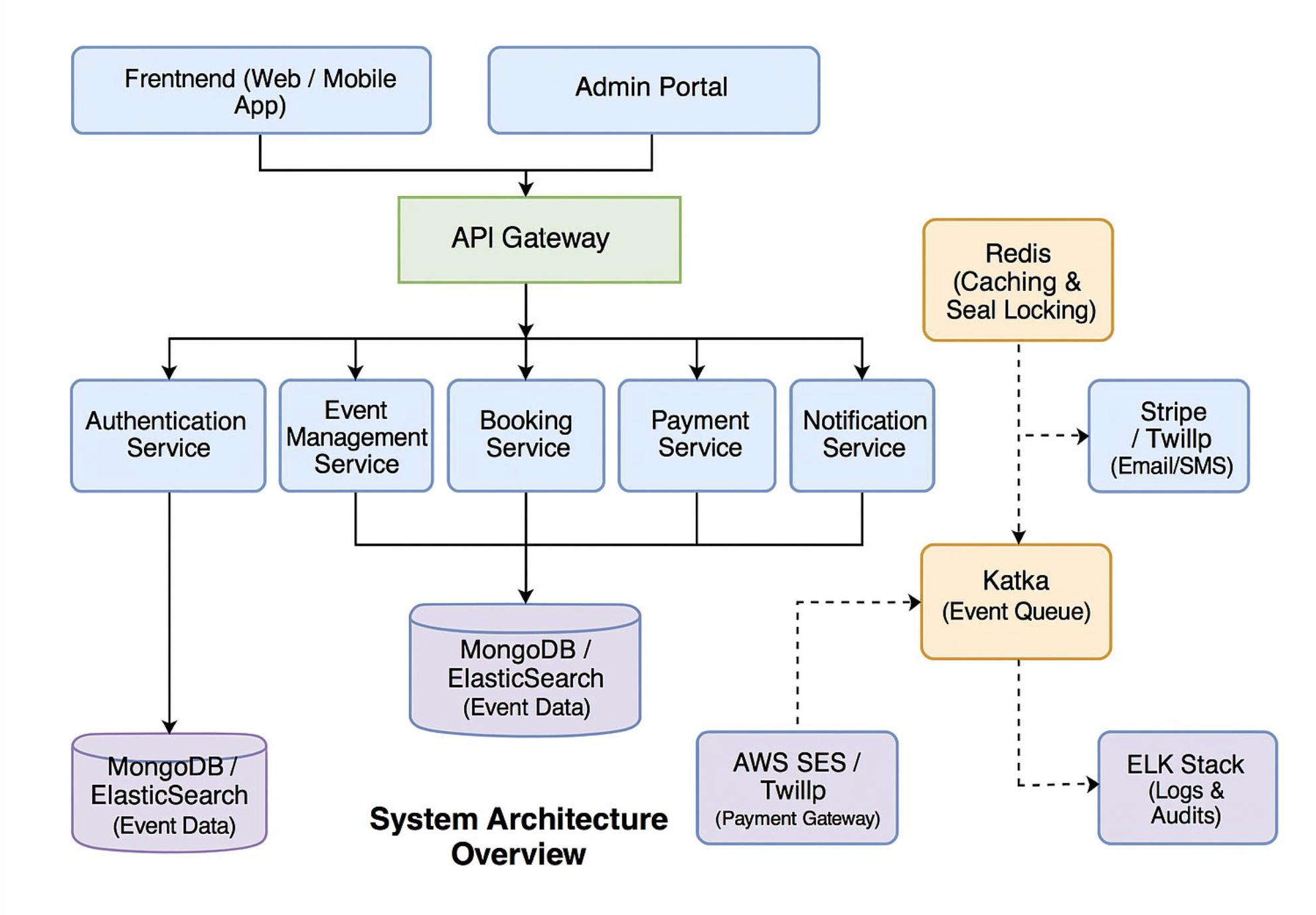
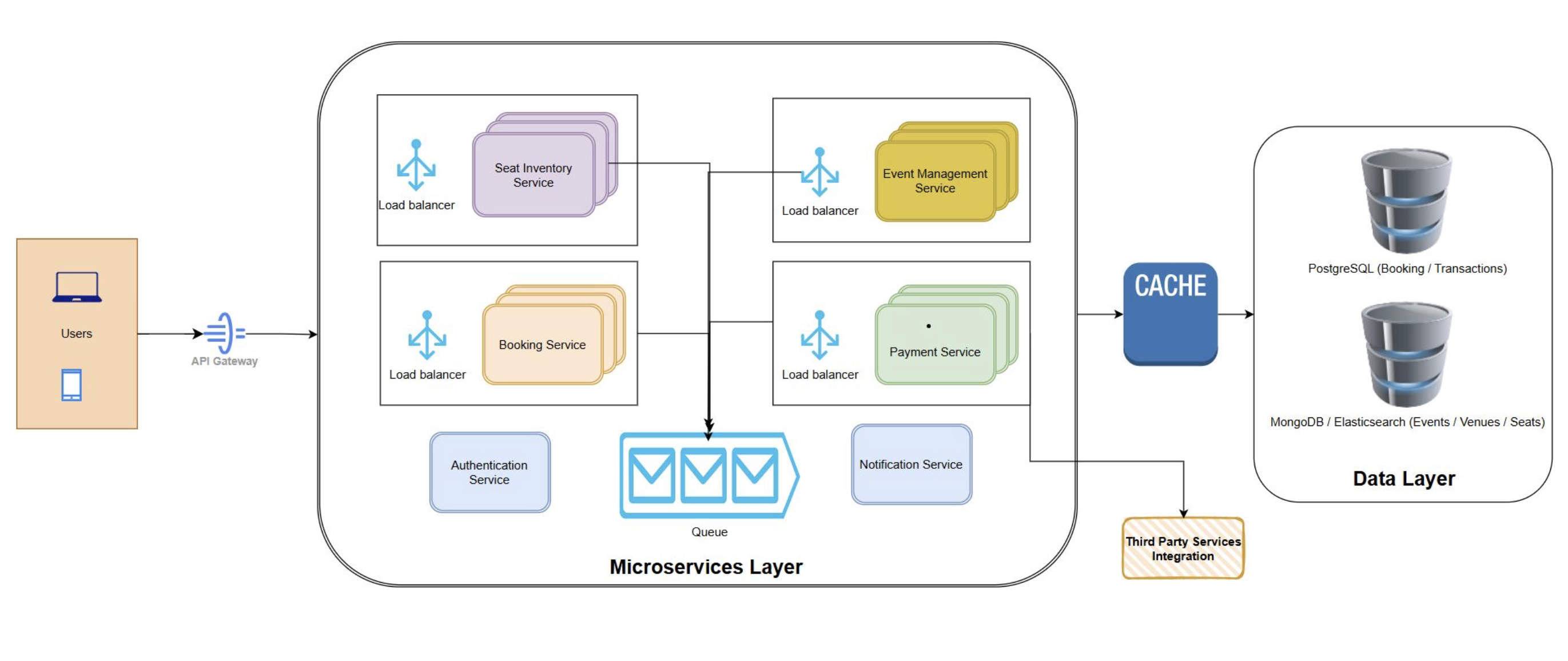
The system follows a microservices pattern to decouple heavy read traffic (browsing) from transactional write traffic (booking).
🔑 Key Design Decisions
1. Concurrency Control (Double-Booking Prevention)
This is the most critical part of the system.
- Optimistic Locking: Uses a version number in the DB. Best for lower contention.
- Pessimistic Locking: Locks the specific row in the DB (e.g.,
SELECT FOR UPDATE). More reliable for extreme contention but can lead to performance bottlenecks. - Redis Distributed Locks: Many modern systems use Redis distributed locks (Redlock) or TTL-based keys to hold a seat for exactly 5 minutes.
2. Seat Hold Timeout
When a user selects a seat, it enters a LOCKED state.
- Logic: Store
seat_id:user_idin Redis with a TTL of 300 seconds. - Result: If the user doesn't pay in 5 minutes, the key expires, and the seat automatically returns to
AVAILABLE.
3. CQRS Pattern
Split your data model:
- Read Side: High-speed seat maps served from Redis/Elasticsearch.
- Write Side: Transactional bookings handled by a relational database (PostgreSQL) for ACID compliance.
🛠️ API Design
Event Management
GET /events: Fetch listings with pagination/filtering.GET /events/{eventId}: Detailed view of venue and available seats.
Booking Workflow
POST /bookings: Initial request to lock seats.
{
  "eventId": "EV-101",
  "userId": "USR-7",
  "seatIds": ["A12", "A13"]
}- Response:
201 Createdwith abookingIdand a timeout timestamp.
🏗️ The Final Design
4. Idempotency Keys for Payments
To prevent duplicate charges, every payment request must include a unique idempotency_key generated by the client. The server checks this key before processing to ensure it never charges the same transaction twice.
5. Audit Logging & Fraud Detection
- CDC (Change Data Capture): Stream every database change to a dedicated Audit service via Kafka.
- ELK Stack: Centralize logs for real-time monitoring and suspicious activity detection (e.g., bot detection during flash sales).
📊 Scale Estimation
- DAU: ~1 Million
- Peak Load: Up to 2,000 bookings per second during major "Star Concert" releases.
- Concurrent Users: ~100,000 during peak events.
- DB Write Pressure: Use sharding on
eventIdorvenueIdto distribute the write load. - Async Processing: Offload Emails, SMS, and Audit logging to Kafka to keep the core booking flow low-latency.
💡 Top Interview Questions
Q: How do you handle payment failures? If a payment fails or the webhook isn't received within the 5-minute window, the Redis TTL lock expires, and a background worker releases the seat back to the pool immediately.
Q: Why use NoSQL for Event Metadata? Event data (concerts, movies) often has varying fields and high read traffic. Storing this in MongoDB or Elasticsearch allows for flexible schemas and extremely fast search/filtering without thumping the transactional SQL DB.