Blog[21]
396 published pages
& the languages in between
Oct 2026
Planning and running a data migration, from business requirements and data profiling to source databases, mapping and ETL pipelines.
- 01Introduction4 pp
- 02Understanding Business Needs4 pp
- 03Data Profiling Techniques4 pp
- 04Introduction to Databases in Migration6 pp
- 05Migration Strategy Design5 pp
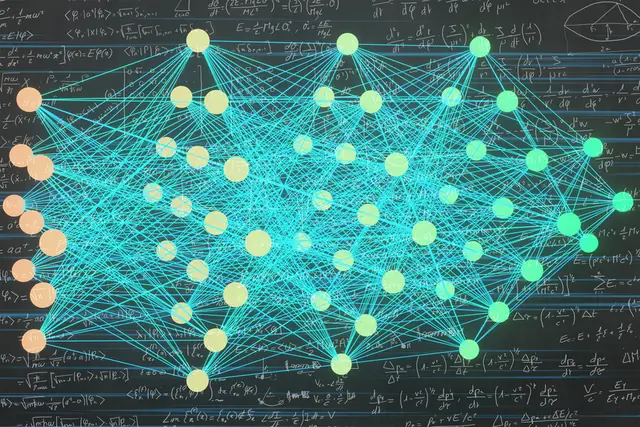
Python, the data science libraries and the core ML algorithms, from NumPy to model deployment.
- 01Python Crash Course3 pp
- 02Numpy5 pp
- 03Pandas13 pp
- 04Matplotlib8 pp
- 05Seaborn9 pp
- 06Capstone Project2 pp
- 07Machine Learning Overview
- 08Linear Regression Models6 pp
- 09Feature Engineering3 pp
- 10Cross Val & LinReg Project4 pp
- 11Logistic Regression Models4 pp
- 12K Nearest Neighbors4 pp
- 13Support Vector Machines4 pp
- 14Decision Trees1 pp
- 15Random Forests2 pp
- 16Boosted Trees2 pp
- 17Supervised Learning Capstone2 pp
- 18Naive Bayes & NLP4 pp
- 19Unsupervised Learning Overview1 pp
- 20Kmeans Clustering4 pp
- 21Hierarchical Clustering1 pp
- 22DBSCAN4 pp
- 23PCA (Principal Component Analysis)4 pp
- 24Model Deployment2 pp

Core concepts of scalable, reliable and efficient systems.
- 01Networking & Communication8 pp
- 02Network Protocols5 pp
- 03Software Architecture Patterns3 pp
- 04Scalability in System Design3 pp
- 05Storage Basics: The Foundation of Data5 pp
- 06System Performance: Speed, Capacity & Efficiency6 pp
- 07System Reliability3 pp
- 08Security in Distributed Systems3 pp
- 09Designing Complex Systems5 pp
The architecture, mathematics and implementation of modern LLMs, built up from the tokenizer to embeddings.
Read Deep Understanding of AI Large Language Models →
Communicating with large language models, from zero-shot and few-shot prompting to the techniques behind agents.
Read Prompt Engineering Guide →Practical notes for building reliable data systems, starting with relational database fundamentals and MySQL.
Read Data Engineering →
From single LLM calls to recursive agent state machines, ending in multi-agent patterns.
- 01Elements
- 02Drafter Agent
- 03Reflection Agent
- 04Reflexion Agent
- 05Multi-Agent Systems
- 06Sub-Agents Pattern
- 07Handoffs Pattern
- 08Skills Pattern
- 09Router Pattern
- 10Hello World Graph
- 11Multiple Input Graph
- 12Sequential Graph
- 13Conditional Graph
- 14Looping Graph
- 15Simple Bot Agent
- 16Chatbot Agent
- 17ReAct Agent
A language built for performance, type safety and concurrency, with memory safety enforced at compile time.
- 01Introduction
- 02Traits
- 03Lifetimes
- 04Testing
- 05Mini Grep CLI
- 06Closures
- 07Iterators
- 08Smart Pointer
- 09Concurrency
- 10Programming Concepts
- 11Memory Management
- 12Structs
- 13Enums
- 14Module System
- 15Vectors
- 16Error Handling
- 17Generics

The mathematical language of AI, from vectors and matrices to eigenvalues and SVD.
Read Master Linear Algebra with Python →A chapter series for building a secure, layered FastAPI service: Pydantic validation, the repository pattern, auth middleware, migrations, logging and tests.
- 010. Project Structure & Code Patterns
- 021. Introduction
- 032. Project Setup
- 043. Layered Architecture
- 054. Pydantic Boundary
- 065. Repository Pattern
- 076. Migrations
- 087. Auth Middleware
- 098. Logging & Observability
- 109. Testing & Quality
- 1110. Production Security Checklist
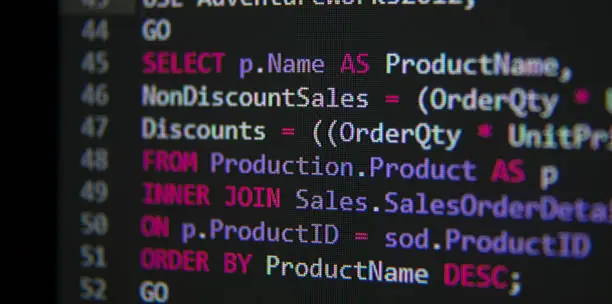
SQL for analysts, from preparing data to time series, cohorts, anomaly detection and experiments.
- 01Page 1: Introduction — Why SQL Is the Analyst
- 02Page 2: Preparing Your Data — The Foundation of Good Analysis
- 03Page 3: Time Series Analysis — Tracking Trends Over Time
- 04Page 4: Cohort Analysis — Understanding Groups Over Time
- 05Page 5: Text Analysis with SQL — Mining Meaning from Words
- 06Page 6: Anomaly Detection — Finding What Doesn
- 07Page 7: Experiment Analysis — Testing Hypotheses with SQL
- 08Page 8: Building Complex Data Sets — Advanced SQL Techniques
How Snowflake works: its architecture and editions, databases and schemas, table and view types, and stages.
- 01Product Overview
- 02Editions
- 03Architecture
- 04Databases and Schemas
- 05Table Types
- 06View Types
- 07Stages
- 08Official Docs

A curated path through the YC Startup Library, from ideation to launch.
- 01Should you start a startup ?
- 02How to Get and Evaluate Startup Ideas ?
- 03Startup Business Models and Pricing
- 04How to get First Customers
- 05How to build an MVP
- 06The Best Way to Launch your Startup
- 07Tips for Technical Startup Founders

The foundations of modern psychology and humanistic therapy, centred on Carl Rogers' person-centred approach.
Read Psychology & Humanistic Counselling →
Orchestration for deploying, scaling and managing containerised applications.
- 01Pod
- 02Worker Node
- 03Kubectl Commands & Debugging
- 04Kubernetes Configuration File
- 05Mongo Express K8s Cluster
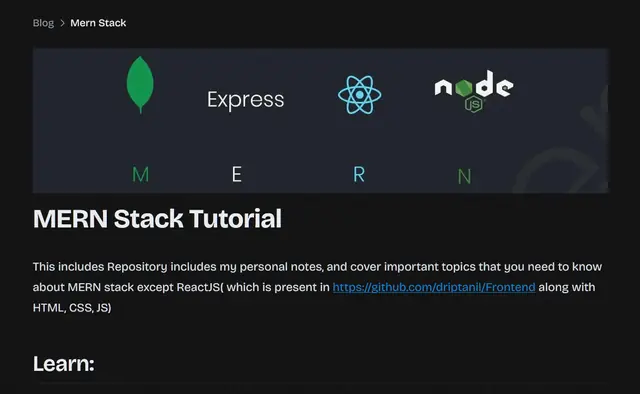
Full-stack web apps with MongoDB, Express, React and Node.
Read MERN Stack →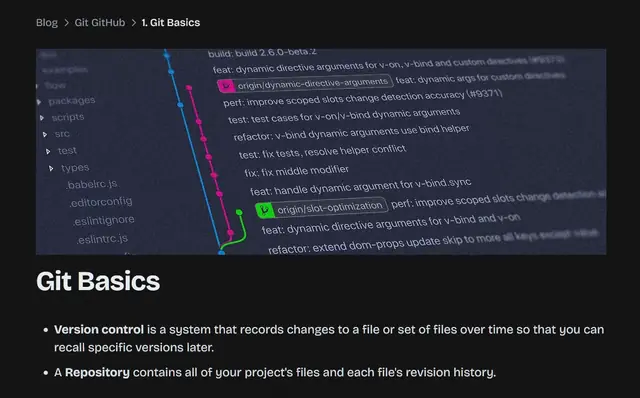
Version control and collaboration, from first commit to professional workflows.
Read Git & GitHub →
The core concepts of the frontend ecosystem, from vanilla JavaScript to React.
Read Frontend Interview Masterclass →The structural blueprints of modern software systems.
Read System Architecture →
How containers give an application an isolated environment, so it runs the same in development and production.
Read Docker →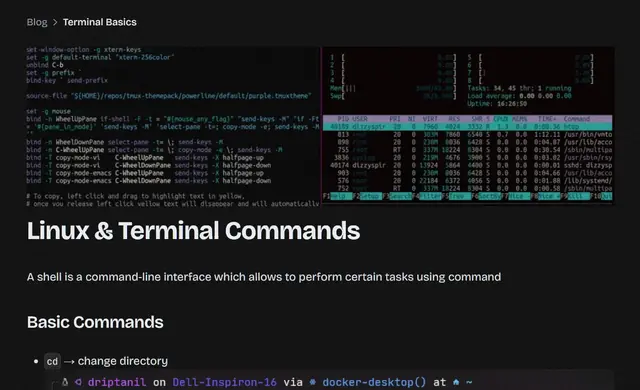
The shell and the essential commands for working from the command line.
Read Linux & Terminal Commands →