Designing a real-time chat application requires handling millions of persistent connections, ensuring sub-second message delivery, and maintaining data consistency across multiple devices—all while keeping conversations private with end-to-end encryption.
Adapted from Mastering System Design from Basics to Cracking Interviews (Udemy) — https://www.udemy.com/course/mastering-system-design-from-basics-to-cracking-interviews/
Introduction
A modern chat system like WhatsApp must handle massive scale while feeling instant and personal. The architecture centers around persistent WebSocket connections and a distributed presence management system.
Requirements
Functional Requirements
- Messaging: 1-to-1 and group chat support.
- Statuses: Typing indicators and real-time online status.
- Media: Secure upload and delivery of images, videos, and documents.
- Receipts: Delivery and read acknowledgments.
- Sync: Multi-device support with message history synchronization.
Non-Functional Requirements
- Low Latency: Sub-second message delivery globally.
- High Availability: 99.99% uptime; users expect the service to always be "on."
- Encryption: End-to-end encryption (E2EE) where the server has zero visibility into content.
- Scalability: Support for 100M+ DAU and billions of messages daily.
Scale Estimation
- DAU: 100 Million users.
- Messages/day: ~5 Billion.
- Peak Load: 3x multiplier during major global events.
- Concurrent Connections: 20–30 million persistent connections at peak.
- Storage: Billions of messages per day requiring partitioned, write-optimized NoSQL stores.
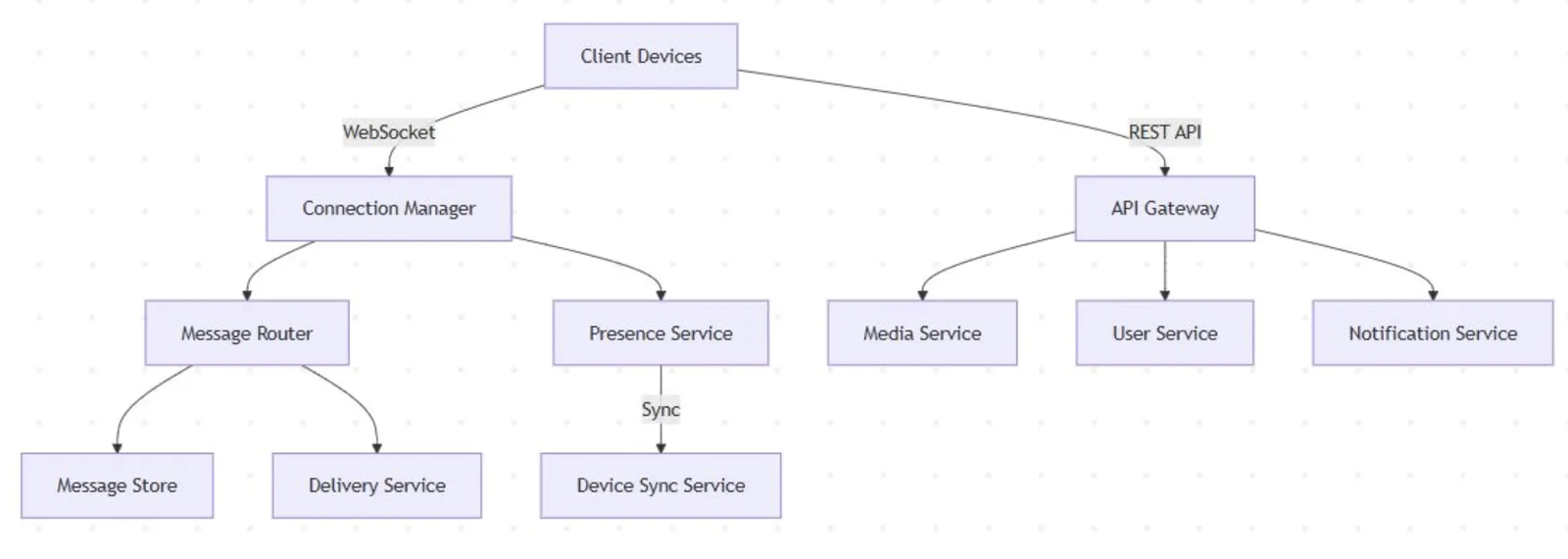
High-Level Architecture
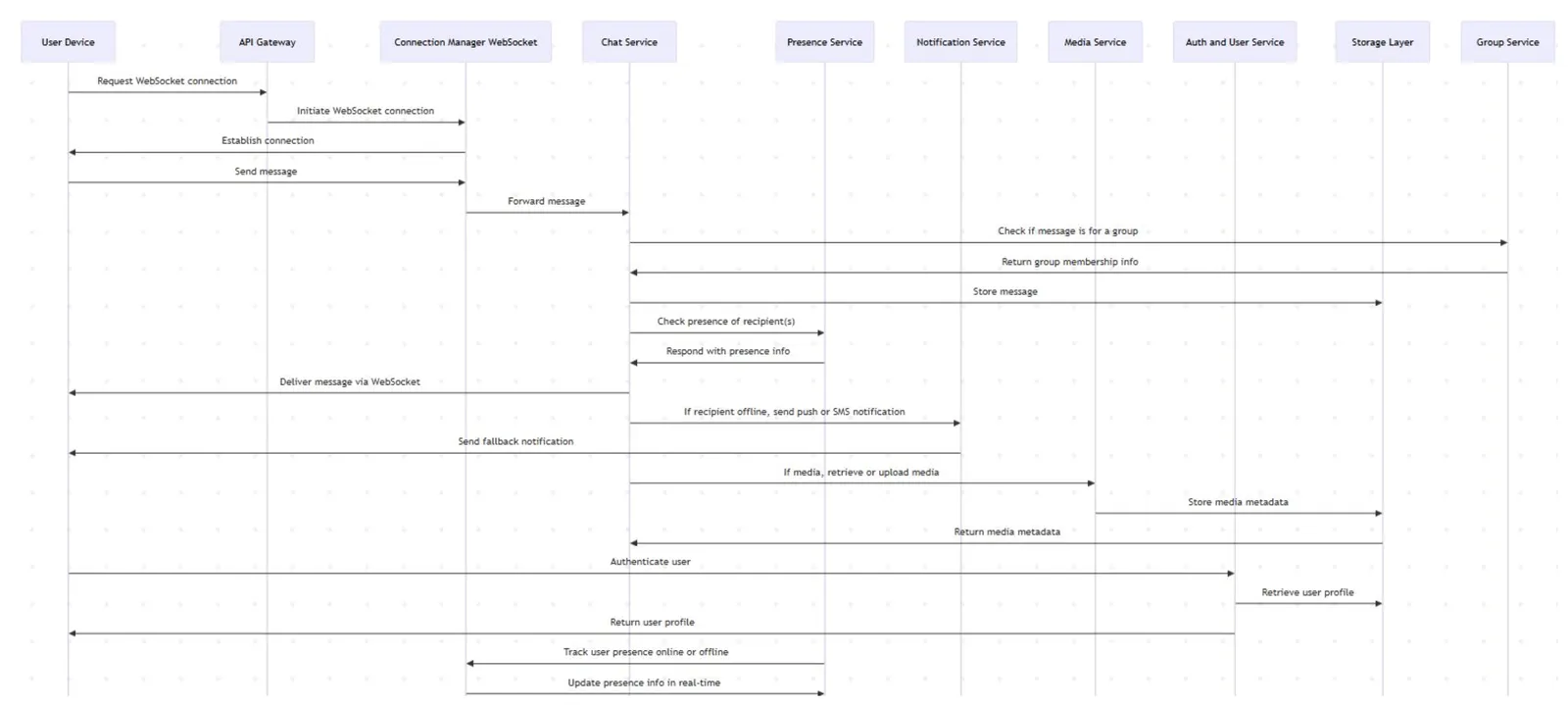
The core of the system is the Connection Manager, which maintains long-lived WebSocket connections for every active device.
Message Flow & Sequence
Understanding how a message travels from Sender to Receiver in both 1-to-1 and Group scenarios.
The WebSocket Advantage
Chat applications rely on WebSockets (rather than standard HTTP) because:
- Bi-directional: The server can push messages to the client instantly.
- Lower Overhead: No need to resend headers for every message after the initial handshake.
- Real-time: Essential for typing indicators and presence updates.
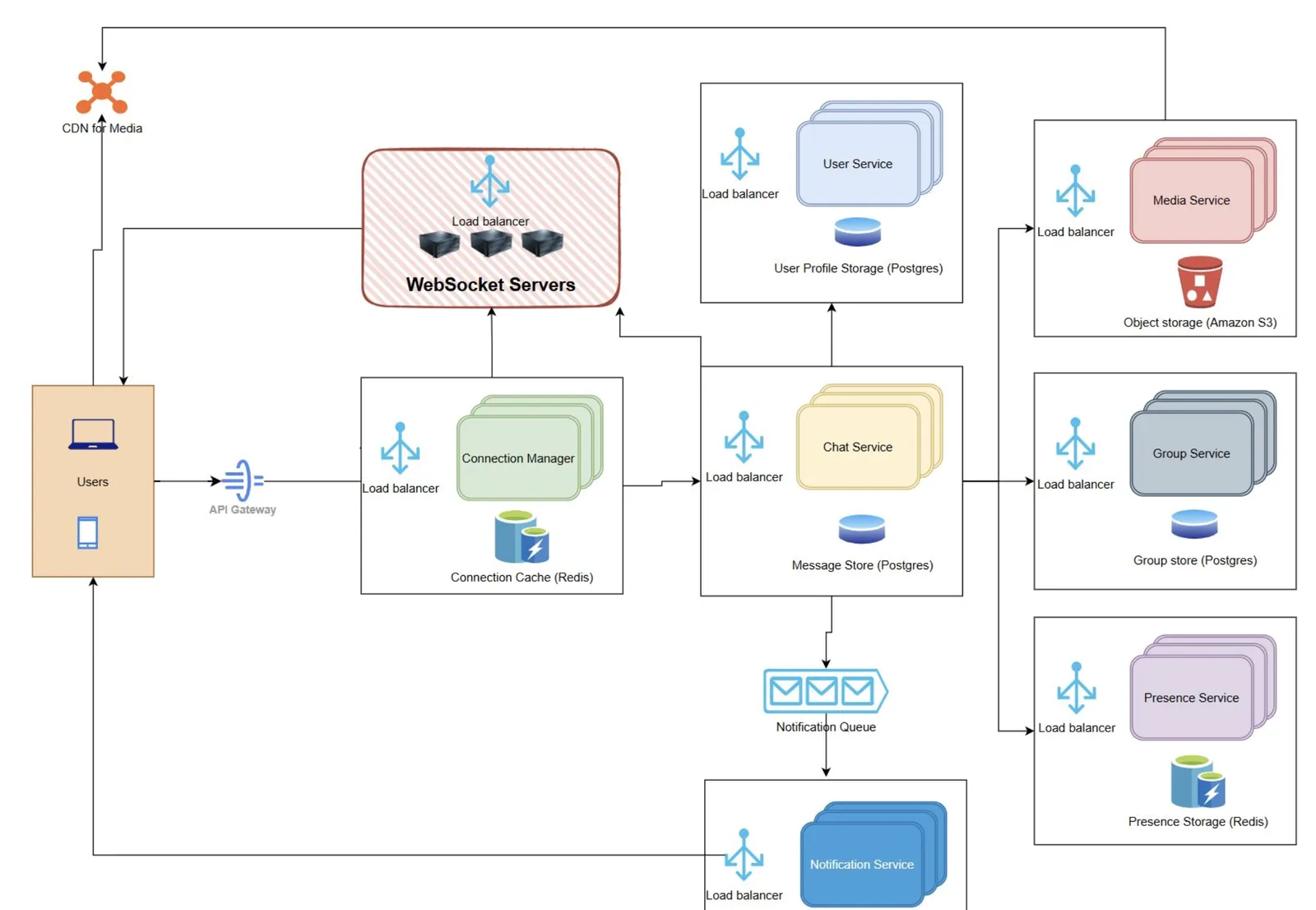
The Final Design
A comprehensive view of the entire chat ecosystem, including media handling and push fallback.
Bottlenecks & Strategic Decisions
- Presence Updates: "Last seen" and typing indicators are high-frequency events. Use a Pub/Sub pattern with Redis to broadcast these efficiently without thumping the main database.
- Storage Write Pressure: 5 Billion messages/day is massive. Use Cassandra or DynamoDB because they are optimized for high-volume append writes and partitioned based on
conversation_id. - Connection Management: Handling 30M concurrent WebSockets is hard. Deploy a dedicated Connection Registry using Redis to track which user ID is connected to which specific WebSocket server instance.
- Encryption (E2EE): Implement key exchange (e.g., Signal Protocol) on the client-side. The server only stores encrypted blobs and metadata, never the raw message.
Top Interview Questions
Q: How do you handle group messages with 500+ members? Instead of the Chat Service fanning out 500 messages, it places a single message in a queue. A pool of Fan-out Workers then iterates through the member list and pushes the message to each member's active WebSocket connection.
Q: What happens if the receiver is offline? If the Connection Manager detects no active WebSocket for the recipient, the message is stored in the DB as "Pending" and a Push Notification is triggered via FCM/APNs to alert the user.