Now that we've built our own BPE loop, let's look at how the pros do it. OpenAI uses a highly optimized BPE implementation called tiktoken. Specifically, GPT-4 uses the cl100k_base encoding.
Adapted from A deep understanding of AI language model mechanisms — https://udemy.com/course/dullms_x
1. Setting Up Tiktoken
The tiktoken library is designed for speed and accuracy. You can install it via pip and load the GPT-4 encoding immediately.
import tiktoken

# Load the GPT-4 tokenizer
tokenizer = tiktoken.get_encoding('cl100k_base')

# Check the vocabulary size
print(f"GPT-4 Vocabulary Size: {tokenizer.n_vocab}")GPT-4 Vocabulary Size: 1002772. Encoding & Decoding
Let's see how GPT-4 breaks down a specific sentence. Notice how it handles common words vs. complex subwords.
text = "My name is Mike and I like toothpaste-flavored chocolate."

# Convert text to IDs
tokens = tokenizer.encode(text)
print(f"Token IDs: {tokens}")

# Inspect individual tokens
for t in tokens:
print(f"ID {t:>6} -> '{tokenizer.decode([t])}'")Token IDs: [5159, 836, 374, 11519, 323, 358, 1093, 26588, 57968, 12556, 76486, 18414, 13]
ID 5159 -> 'My'
ID 836 -> ' name'
ID 374 -> ' is'
ID 11519 -> ' Mike'
ID 323 -> ' and'
ID 358 -> ' I'
ID 1093 -> ' like'
ID 26588 -> ' tooth'
ID 57968 -> 'paste'
ID 12556 -> '-fl'
ID 76486 -> 'avored'
ID 18414 -> ' chocolate'
ID 13 -> '.'3. Key Observations 🔍
- Whitespace Inclusion: Notice the spaces at the start of tokens like
' name'and' is'. GPT-4 includes the space as part of the following token, which is more efficient than having a separate "space" token. - Subword Splitting: The word "toothpaste-flavored" was broken into 5 pieces:
tooth,paste,-fl,avored. - Case Sensitivity:
'My'(ID 5159) is a different token than'my'(ID 741).
4. Visualizing Vocabulary Distribution
What kind of tokens are in this 100,000-word vocabulary? We can plot the lengths of the first 10,000 tokens to see the distribution.
import matplotlib.pyplot as plt
import numpy as np

# Get lengths of first 10,000 tokens
token_lengths = [len(tokenizer.decode([i])) for i in range(10000)]

plt.figure(figsize=(10, 4))
plt.hist(token_lengths, bins=range(1, 20), color='#7ed6df', edgecolor='white')
plt.title('Token Length Distribution (First 10k Tokens)')
plt.xlabel('Number of Characters')
plt.ylabel('Frequency')
plt.show()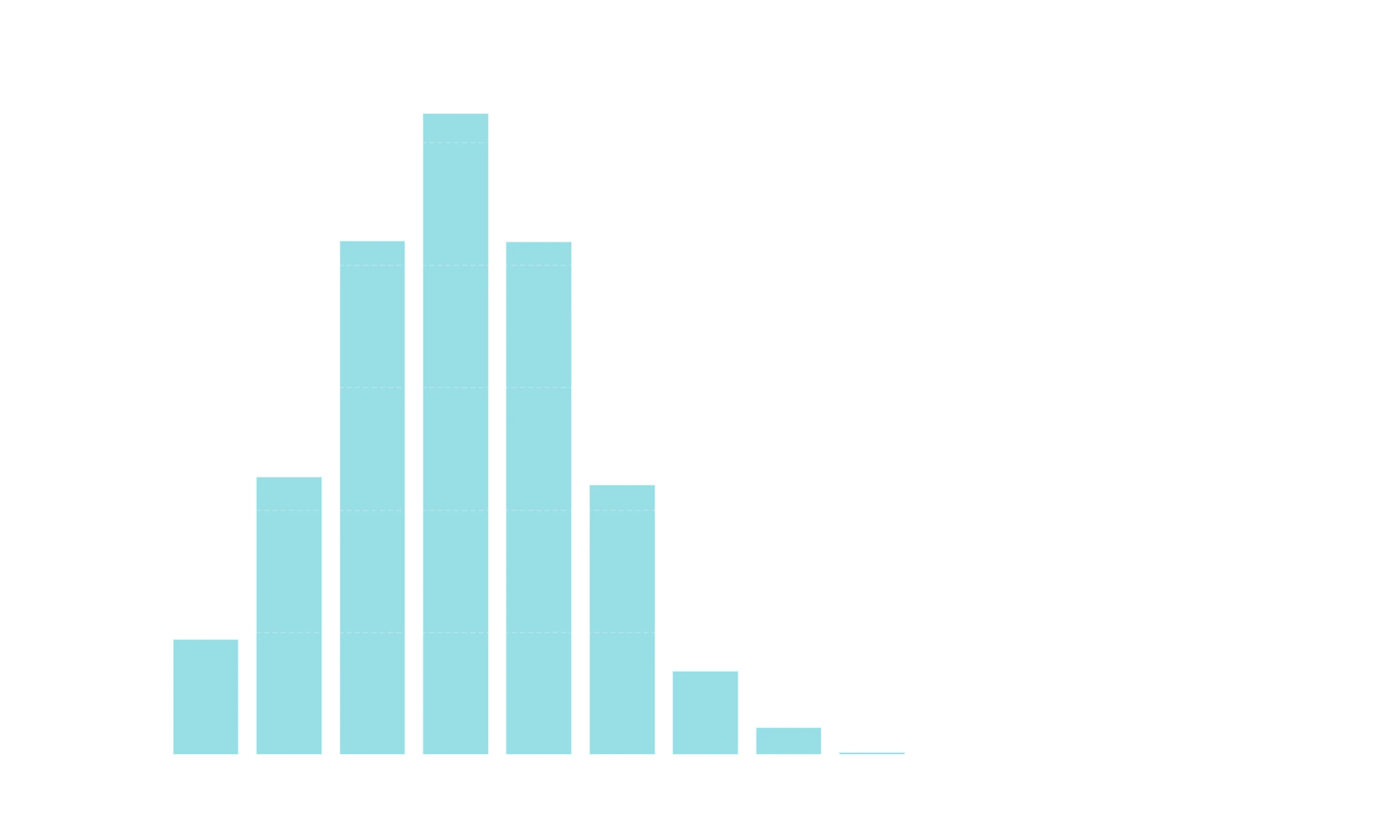
The histogram shows that GPT-4 favors tokens that are 3-6 characters long, balancing compression and granularity.
Summary
GPT-4's tokenizer is the culmination of the BPE process we learned. It's:
- Efficient: Uses a large vocabulary (100k) to compress common words.
- Robust: Can handle any character sequence by breaking it into subwords or bytes.
- Context-Aware: Includes spaces and punctuation to preserve the exact structure of the text.
In the next lesson, we'll dive into Token Efficiency and see how different models compare!